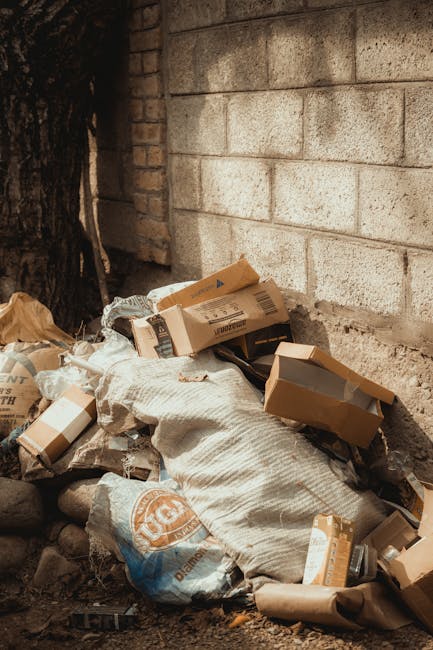
Avoid hidden rubbish removal charges in Eastham: a practical guide to fair, transparent pricing
Rubbish removal should feel straightforward. You ask for a quote, you book a slot, and the waste disappears without drama. But anyone who has ever been hit with a surprise "extra" fee knows it is rarely that neat. If you want to avoid hidden rubbish removal charges in Eastham, the key is to understand how pricing is built, where vague wording can trip you up, and what to ask before anyone turns up with a van.
This guide breaks the whole thing down in plain English. You will learn what hidden charges usually look like, how reputable clearance teams structure quotes, which questions matter most, and how to compare options without getting lost in sales talk. There's a lot less mystery here than many people think. Truth be told, most nasty surprises are avoidable if you know what to check.
If you are also comparing broader waste services, it can help to look at a provider's pricing and quotes guidance, their approach to waste removal, and how they handle recycling and sustainability. Those pages often reveal how transparent a company really is.
Table of Contents
- Why avoiding hidden rubbish removal charges in Eastham matters
- How rubbish removal pricing usually works
- Key benefits of transparent rubbish removal
- Who this is for and when it makes sense
- Step-by-step guidance
- Expert tips for better results
- Common mistakes to avoid
- Tools, resources and recommendations
- Law, compliance, standards and best practice
- Options, methods and comparison table
- Case study or real-world example
- Practical checklist
- Conclusion
- Frequently Asked Questions
Why Avoid hidden rubbish removal charges in Eastham Matters
The problem with hidden charges is not just the money, although that matters. It is the uncertainty. A quote that looks fine at first can become awkward once the team arrives and starts adding fees for access, labour, weight, awkward items, or disposal categories you were never told about. Suddenly, the job costs more than the value of the peace of mind you were trying to buy in the first place.
For homeowners, landlords, tenants, shop owners, and tradespeople in Eastham, that uncertainty can cause real friction. You might be clearing a garage on a Saturday morning, emptying a flat at short notice, or trying to get a renovation site back under control before the next phase starts. In those moments, the last thing you want is a back-and-forth over "unexpected conditions".
It also matters because rubbish removal is usually booked under time pressure. People do not ring around ten companies for fun. They book when they need space back fast. That is exactly when vague pricing can sneak in. A cheap-looking headline price can be doing a lot of heavy lifting, if you see what I mean.
Transparent pricing helps you make calm decisions. It also makes comparison easier. When quotes are clear, you can compare like for like instead of guessing what has been left out. And if a provider is open about what is included, that usually says something good about the rest of the service too.
Expert takeaway: The safest way to avoid hidden rubbish removal charges is to demand a quote that spells out access, labour, item type, disposal method, and any possible extras before the job is booked.
How Avoid hidden rubbish removal charges in Eastham Works
At its simplest, a rubbish removal quote should tell you what the company expects to collect, how much space it will take in the vehicle, what labour is needed, and whether anything unusual could change the price. Good pricing is not about being the lowest number on the page. It is about being the most believable number.
Here's the rough flow most customers go through:
- You describe the waste as accurately as you can.
- The provider estimates the load size, access needs, and disposal type.
- A price is given, ideally in writing.
- The team arrives and checks the load against what was discussed.
- If something genuinely changes, the provider should explain it clearly before charging more.
That final point is important. There is a difference between a fair adjustment and a surprise surcharge. For example, if you said "a few bits from the shed" and the team finds a full shed of broken fencing, damp timber, paint tins, and a heavy old freezer, the scope has changed. That is reasonable. What is not reasonable is adding fees that were never mentioned and were easy to foresee from the start.
In practice, transparent companies try to ask enough questions before arrival to avoid awkward conversations at the kerb. They may ask about stairs, parking, distance from the property, heavy lifting, or mixed waste. That is a good sign, not a nuisance. It means they are trying to quote properly rather than guessing and hoping for the best.
If you are clearing a house, loft, or garage, it can help to compare the service against related pages like house clearance, loft clearance, and garage clearance. Different types of clearance often carry different handling costs, and that affects price.
Key Benefits and Practical Advantages
Transparent rubbish removal is not only about avoiding a sting at payment time. It makes the whole process smoother from start to finish.
- Better budgeting: You know what you are likely to pay before the team arrives.
- Less stress: No tense conversation when the van is already outside.
- Faster decision-making: Clear quotes make comparison easier.
- Fewer disputes: The work scope is understood up front.
- More confidence: You can book without that nagging "what am I missing?" feeling.
There is also a practical benefit that people overlook. Clear pricing often means better scheduling. When a company has gathered the right details, they are less likely to under-quote and rush the job. That tends to produce a calmer, cleaner outcome. Nobody wants a half-finished clearance with a crew looking at the clock.
For business customers, that matters even more. Offices, shops, landlords, and trade teams often need predictable costs to keep projects moving. If you are clearing work premises, a page like office clearance or business waste removal may be especially relevant because the service needs are often more structured than a one-off domestic job.
One small but useful point: if pricing is honest, it usually makes the service feel more respectful. That sounds obvious, but it is true. People notice when a provider takes the time to explain the details rather than hiding behind vague wording.
Who This Is For and When It Makes Sense
This advice is useful for almost anyone arranging waste collection in Eastham, but some people benefit more than others.
Homeowners and tenants
If you are clearing out a spare room, dealing with end-of-tenancy rubbish, or finally tackling the shed, you will want a price you can trust. A small job can become expensive if the provider charges extra for stair carries, parking restrictions, or mixed waste that was obvious from the photos.
Landlords and letting agents
Rental clearances often happen under pressure. A property needs to be turned around quickly, and there is usually already enough admin without pricing disputes. Clear rubbish removal charges help keep the process professional.
Tradespeople and builders
Builder's waste can be messy and unpredictable. If you are dealing with rubble, timber, plasterboard, packaging, or old fixtures, check how the provider prices load type and weight. If you need a more specific service, the page on builders waste clearance is a sensible place to look.
Businesses and facilities teams
For commercial jobs, there is often more waste volume, more access complexity, and tighter timing. One unclear fee can throw off a small budget quickly. That is why commercial clients should ask for a written breakdown every time.
People dealing with bulky items
Old furniture, fridges, wardrobes, mattresses, and garden waste can all affect pricing differently. If your job centres around bulky items, services like furniture disposal or furniture clearance may be more suitable than a general "everything removed" description.
Put simply: if the job is larger than a bin bag or two, or if access is awkward, you should assume the risk of hidden charges is higher unless you ask the right questions.
Step-by-Step Guidance
Here is a practical way to protect yourself before you book.
- List everything that needs removing. Be specific. "Old furniture, broken shelves, one wardrobe, and garden cuttings" is better than "miscellaneous rubbish".
- Send clear photos or a short video. Include access routes, stairs, garden gates, parking space, and any items that are especially heavy or awkward.
- Ask what is included in the quote. Labour, loading, disposal, transport, and VAT if applicable should all be clear.
- Ask what could change the price. Find out whether the company charges for waiting time, extra labour, heavy items, or loading over a quoted volume.
- Confirm whether mixed waste costs more. Some waste types are more costly to process than others.
- Get the quote in writing. An email or message is better than a vague phone promise you cannot check later.
- Check the terms before the appointment. This is where extras and exclusions usually hide.
- Be available when the team arrives. If they can see the job and confirm any changes with you on the spot, the risk of dispute drops sharply.
A useful habit: ask the provider to repeat back the job scope in simple terms. If they say, "So, we're taking the shed contents, three chairs, and the small pile of garden waste," you know you are on the same page. If they hesitate, that is worth noticing.
Expert Tips for Better Results
Over time, the same few habits make the biggest difference.
Use photos that tell the truth
Don't crop out the awkward corner or the extra pile behind the door. It's tempting, naturally. But the quote is only as good as the information you give. One slightly hidden pile can become a pricey surprise later.
Ask about access first, not last
Parking distance, basement steps, narrow hallways, and shared entrances can all affect labour time. This is especially relevant for flat clearance jobs where access is often the real challenge, not the rubbish itself.
Be careful with "from" pricing
"From GBPX" is not bad in itself. The issue is when the floor price is so low that it bears little relation to most real jobs. If the company uses this model, ask what the typical final price looks like for a job like yours.
Watch for pricing language that is too neat
Words like "all-inclusive" sound comforting, but they still need explanation. All-inclusive of what, exactly? Labour? Recycling? Stair carries? Fuel? The more boring the clarification, the better. Boring is good here.
Choose clarity over speed
A fast quote is fine. A rushed quote is not. If a provider gives you a number in seconds without asking anything meaningful, that might be a red flag. Not always, but often enough to matter.
One small practical insight: when a company is honest about what it cannot price until it sees the job, that is usually better than pretending certainty. A bit of caution can save a lot of grief later.
Common Mistakes to Avoid
People usually run into trouble for one of these reasons.
- Only asking for the cheapest price: The lowest quote can leave out important parts of the job.
- Giving vague descriptions: "Just a bit of rubbish" is not enough detail.
- Forgetting access issues: Steps, lifts, narrow driveways, or no parking can affect the final bill.
- Not checking what counts as mixed waste: Different materials may be treated differently.
- Ignoring terms and conditions: This is where many extras are quietly defined.
- Assuming all providers quote the same way: They do not. Some include far more than others.
Another common one is leaving it too late. If you book the day before a house move or renovation deadline, you may feel pushed into accepting the first quote you receive. That is understandable, but it can be expensive. A small bit of planning goes a long way.
And yes, sometimes people feel awkward asking questions because they do not want to "seem difficult". Honestly, ask anyway. It's your money. A decent provider will not mind.
Tools, Resources and Recommendations
You do not need fancy tools to avoid hidden rubbish removal charges, but a few simple things help a lot.
- Your phone camera: Take wide shots and close-ups of the waste and access points.
- A rough item list: Write down what is going and what is staying.
- Measurements: Doorways, stair widths, or the size of larger furniture can be surprisingly useful.
- Checklists: A quick pre-booking checklist prevents missed details.
- Written messages: Keep the quote in writing where possible.
If the job involves a mixture of waste types, it can help to check relevant service pages before you ask for a quote. For example, a garage clearance may be better understood through garage clearance, garden waste through garden clearance, and a full property emptying through home clearance or house clearance. Matching the service to the actual job makes pricing far clearer.
For trust and service standards, it is also worth reviewing pages such as about us, insurance and safety, and payment and security. You are looking for signals that the company takes both safety and customer clarity seriously.
Law, Compliance, Standards, or Best Practice
Rubbish removal sits within a wider framework of UK waste responsibilities, so a careful approach is sensible. You do not need to be an expert in the rules to protect yourself, but you should expect a professional provider to operate responsibly, handle waste lawfully, and be clear about what happens to the items once collected.
In normal practice, that means a reputable company should be able to explain how it deals with waste transfer, disposal routes, and any recycling processes that are relevant to the material. They should also be careful about hazardous or restricted items. If something needs special handling, that should be explained before collection, not after.
Best practice also means fair quoting. A quote should not rely on vague wording that gives the provider room to add charges later without warning. If a business cannot explain its own pricing clearly, that is usually a sign to pause.
If you want a better picture of standards and working methods, look at pages such as health and safety policy, complaints procedure, and terms and conditions. Those are often the quiet clues that a company is run properly, not just loudly marketed.
For businesses, compliance matters even more. Waste must be handled in a way that matches the type of waste and the expected duty of care. That is one reason commercial customers should avoid "cash and disappear" style offers. Cheap can get expensive very quickly if the paperwork or disposal trail is not right.
Options, Methods, and Comparison Table
There are a few common ways people arrange rubbish clearance in Eastham. Each one has pros and cons, especially if you are trying to keep costs clear.
| Option | How pricing usually works | Best for | Risk of hidden charges |
|---|---|---|---|
| Single-item collection | Often priced per item or by item type | One bulky item, such as a sofa or mattress | Medium, if access or disposal category is not explained |
| Load-based clearance | Priced by van space or volume | Mixed household or garage waste | Medium to high, if the load estimate is vague |
| Quoted clearance visit | Assessed from photos, list, or site visit | Larger or more awkward jobs | Lower, when details are confirmed in writing |
| Full property clearance | Usually bespoke, based on scope and access | House, flat, loft, or office clearances | Lower if the scope is defined well; higher if not |
In most real-world situations, the best value comes from a tailored quote rather than a quick guess. That does not mean you need an in-person visit every time, but it does mean the provider should ask enough questions to make the price credible.
If you are clearing a smaller property or shared building, the same logic applies to flat clearance. If you are dealing with a work premises, the commercial route through office clearance or business waste removal may be more relevant because access and timing are usually different.
Case Study or Real-World Example
Here is a realistic example from a typical Eastham household scenario.
A couple needs to clear a garage that has slowly filled up over the years: old chairs, paint tins, a broken lawnmower, a few bags of garden waste, and some heavy bits of timber. They contact one provider who gives a quick low quote without asking much. Another provider asks for photos, checks whether the paint tins are full, asks about parking, and confirms whether the timber is treated or untreated.
The first quote looks cheaper at a glance. The second feels more thorough. Guess which one is less likely to spring a surprise? Exactly.
On collection day, the detailed provider can arrive knowing what to expect. The job is quicker, the conversation is calmer, and the final bill matches the original estimate because the scope was discussed properly. The couple does not need to argue. The garage gets cleared. The space smells faintly of dust and damp cardboard for about ten minutes, then it's done, which is always a nice moment, by the way.
That sort of outcome is not unusual. The common thread is simple: detail up front saves money and hassle later. It is not glamorous, but it works.
Practical Checklist
Use this before you confirm a booking.
- Have I listed all items clearly?
- Have I shared photos or a video of the waste and access?
- Do I know whether the price includes labour, loading, transport, and disposal?
- Have I asked what counts as an extra charge?
- Do I understand how stairs, parking, distance, or awkward items affect the quote?
- Have I checked the terms and conditions?
- Is the quote in writing?
- Have I matched the job to the right service page or service type?
- Do I know whether hazardous or unusual items need special handling?
- Am I comparing the overall value, not just the headline price?
That last one is the big one. The cheapest quote is only cheap if it stays cheap.
Conclusion
Avoiding hidden rubbish removal charges in Eastham is really about one thing: clarity. Be clear about what needs removing, how the property can be accessed, what the quote includes, and what could change the price. Ask the awkward questions early. It saves everyone time. It usually saves money too.
Once you know what to look for, the process becomes much easier. You stop comparing headline numbers and start comparing real value. That is where the smarter choice usually sits. Not the flashiest. Not the cheapest by default. Just the one that is honest, specific, and easy to trust.
Get a free quote today and see how much you can save.
If you are still weighing up your options, a final look at the company's recycling and sustainability approach can give you one more useful clue about how carefully they work. And sometimes that little extra confidence is all you need to move forward.
Frequently Asked Questions
How do I avoid hidden rubbish removal charges in Eastham?
Ask for a written quote, share clear photos, explain access issues, and confirm exactly what is included. The main aim is to remove guesswork before the team arrives.
What extra charges should I watch out for?
Common extras can include difficult access, heavy lifting, waiting time, mixed waste, stairs, parking problems, or items that need special disposal. Always ask what could change the price.
Is a cheap rubbish removal quote a warning sign?
Not always, but it can be. If the quote is far lower than others and comes with very little detail, it may be missing something important. Cheap is fine; unclear is the problem.
Should I send photos before booking rubbish removal?
Yes, absolutely. Photos help the provider judge load size, access, and item type. A good set of photos can prevent most quote disputes later.
Can rubbish removal prices change on the day?
They can, but only if the job is different from what was described. If the provider discovers more waste, heavier items, or tougher access than expected, a fair adjustment may be reasonable.
What is the best way to compare rubbish removal companies?
Compare what is included, not just the headline cost. Look at labour, disposal, access assumptions, and whether the quote is written clearly enough to stand up later.
Do I need a site visit for a rubbish removal quote?
Not always. Photos and a detailed description are enough for many jobs. For larger or awkward clearances, a site visit can reduce pricing risk.
Are house clearance and rubbish removal priced the same way?
Usually not. A house clearance often needs more detailed scoping because the volume, item mix, and access can be more complex. A general rubbish collection may be simpler, but it still needs clarity.
What should be in a proper rubbish removal quote?
A good quote should explain what will be removed, what the price covers, any assumptions about access, and any possible extras. If it is too brief, ask for more detail.
How can I tell if a provider is trustworthy?
Look for clear communication, written terms, sensible questions before collection, and a willingness to explain pricing. Trustworthy providers tend to be specific rather than slippery.
Does mixed waste cost more to remove?
Often, yes. Mixed waste can require different handling or disposal routes, so it may not price the same as a single waste stream. That is one reason photos and item lists matter so much.
What is the simplest way to protect myself from surprise fees?
Use a checklist, confirm everything in writing, and do not book until the quote makes sense to you. If anything feels vague, ask again. Better a slightly longer conversation than an expensive surprise.